


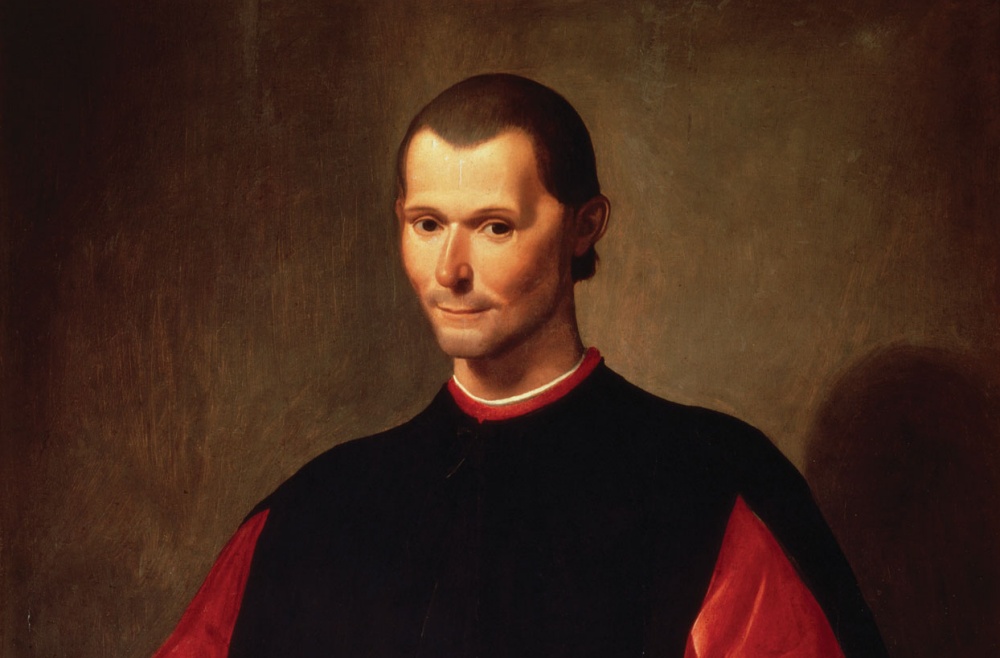
Niccolò Machiavelli’s The Prince is one of the most controversial books about politics ever written. It was written in 1513, offering advice to rulers on how to gain and maintain power during a period of political instability in Italy.
Unlike many earlier political thinkers, Machiavelli focused on what actually works in politics rather than on what rulers ideally should do.
Machiavelli is widely regarded as the Father of Political Realism because he believed rulers should focus on what works in politics rather than on ideal moral behavior.
He argued that a ruler may sometimes need to break promises, use deception, or employ force if doing so maintains order and protects the state.
This has made the book both famous and infamous. It has also inspired a question that still divides people today: “Does the end justify the means?”
The Prince Was Written by Niccolò Machiavelli
Niccolò Machiavelli was a diplomat from Florence, Italy. After losing his government position when the Medici family returned to power, he wrote The Prince in an effort to regain their favor.
The book was intended as a practical guide for rulers navigating the political instability and power struggles during his time.
“The Prince” Is Anyone Who Governs a Society
Machiavelli used the word “prince” to describe anyone in power.
During his time, Italy was divided into many competing states ruled by princes, dukes, kings, lords, and other powerful figures.
Today, the term could be applied to presidents, prime ministers, or anyone who must make difficult decisions to maintain power and stability.
Anyone Who Follows the Book Is a Machiavellian
If someone follows the ideas in The Prince, they may be called “Machiavellian,” which has a negative meaning today.
In psychology, Machiavellianism is one of the three traits of the Dark Triad, alongside narcissism and psychopathy, and is associated with strategic manipulation and a lack of concern for morality.
What the Prince Must Do According to Niccolò Machiavelli
Niccolò Machiavelli wrote that a prince must preserve the state and maintain power, even if doing so requires actions normally considered immoral.
Separate Politics From Ethics
Machiavelli believed that rulers must sometimes choose between what is right and what works, or between ethics and politics.
If they always try to be morally good, they may end up being weak or overthrown. The world is full of enemies, and traitors.
They must do what is necessary to keep the state safe and powerful, even if that means using deception, harsh punishment, or violence.
The Goal Is Not to Be Good But Effective
According to Machiavelli, the most important quality of a ruler is effectiveness.
What matters is whether they can maintain power, preserve the state, and keep the country stable. The goal is to succeed, not to be loved.
If being generous and kind helps, then do it. But if fear, deception, or cruelty are more effective, those may also be justified.
Use Brute Force or Mind Games If Necessary
In The Prince, Machiavelli said that rulers should use whatever tools are necessary to gain and maintain power, including both force and deception.
For Machiavelli, the lion and the fox symbolize the two qualities a ruler needs: the lion’s strength to intimidate enemies and the fox’s cunning to avoid traps and deception.
They must know when to fight like a lion, using strength and courage, and when to act like a fox, using cunning and strategy.
It Is Better to Be Feared Than to Be Loved
One of Machiavelli’s most famous lines is that it is “better to be feared than loved” if a ruler can’t be both. Why? Because fear is more reliable.
People’s love is based on emotion, and it can easily disappear when times get hard. But they will never defy if they are afraid of the consequences.


Never Do Something That Will Make People Hate
Machiavelli made it clear that while fear is useful, hatred can put a ruler at risk of rebellion, assassination, or betrayal.
If they must be cruel, they should do it carefully and sparingly.
Also, they should never take people’s land or money unless absolutely necessary, since such actions are more likely to make them hated.
Always Be More Powerful Than Enemies and Allies
A ruler should always try to be stronger than those around him, including both enemies and potential rivals, to remain safe, respected, and in control.
They should also be able to defend the state with their own people.
Machiavelli regarded mercenary soldiers as unreliable and dangerous because their loyalty was based on money rather than devotion to the state.
Does the End Justify the Means?
Does the end justify the means? Niccolò Machiavelli never explicitly asked this question in The Prince, but many conclude that his answer would be, “Yes.”
He argued that a ruler’s primary responsibility is to preserve the state and maintain political stability. If deception, harsh punishment, or violence are necessary to achieve that, they may be justified.
They can’t always act according to conventional morality if doing so would endanger the state. Sometimes, the price of doing good is losing power.