The Korean War started in 1950 and lasted until 1953, but no peace treaty was ever signed, so technically, it never officially ended.
North and South Korea are still enemies, so both train their soldiers and require men to serve in the military in case the war ever resumes.
Even though they share the same language, culture, and history, they have very different governments, economies, and international relations.
To understand why Korea is divided, we have to look back at what happened during and after the Second World War.
Korea Split When the Second World War Ended
Japan had colonized Korea in 1910. When the Second World War ended in 1945, it was freed from the Japanese rule.
The Allied Powers agreed that it should become independent. However, they also feared instability and wanted to prevent either side (the United States or the Soviet Union) from gaining too much influence.
The main Allied Powers that worked together to defeat the Axis during the Second World War were the United States, the Soviet Union, the United Kingdom, and China.
So, they decided to temporarily divide it into two zones: The United States would control the south and the Soviet Union the north.
The Allies Divided Korea at the 38th Parallel
The 38th parallel is a line of latitude that was chosen as the dividing line between North Korea and South Korea. It was selected by American military planners in a hurry after the Japanese surrendered.
It was supposed to be temporary, but it became a more serious divide when the Cold War began. The Soviet Union and the United States installed different types of governments in their respective zones.
During the Cold War, Both Koreas Formed Their Own Governments
As the Cold War heated up, the 38th parallel became permanent.
By 1948, North Korea and South Korea had formed separate governments, each claiming to be the only legitimate ruler of the entire Korean Peninsula.
North Korea: Democratic People’s Republic of Korea Under Kim Il-sung
In 1948, the government in North Korea was officially established as the Democratic People’s Republic of Korea, with Kim Il-sung as its leader.
Kim Il-sung had fought against the Japanese and trained under the Soviets. He believed in communism and wanted to unify Korea under it.
Under him, the North adopted a centralized, one-party state controlled by the Korean Workers’ Party. He abolished private businesses, redistributed land to farmers, built a strong military, and gradually closed the borders.
South Korea: Republic of Korea Under Syngman Rhee
Also in 1948, the southern part of Korea became the Republic of Korea, with Syngman Rhee as its first president, who was an anti-communist.
South Korea adopted a capitalist system with private property, free enterprise, and eventually a more open political system.
In its early years, it was economically weaker and politically unstable compared to the North because Japan had built factories mostly in the North.
But by the 1970s through the 2000s, it transformed into one of Asia’s strongest economies and a stable democracy, thanks to the United States.
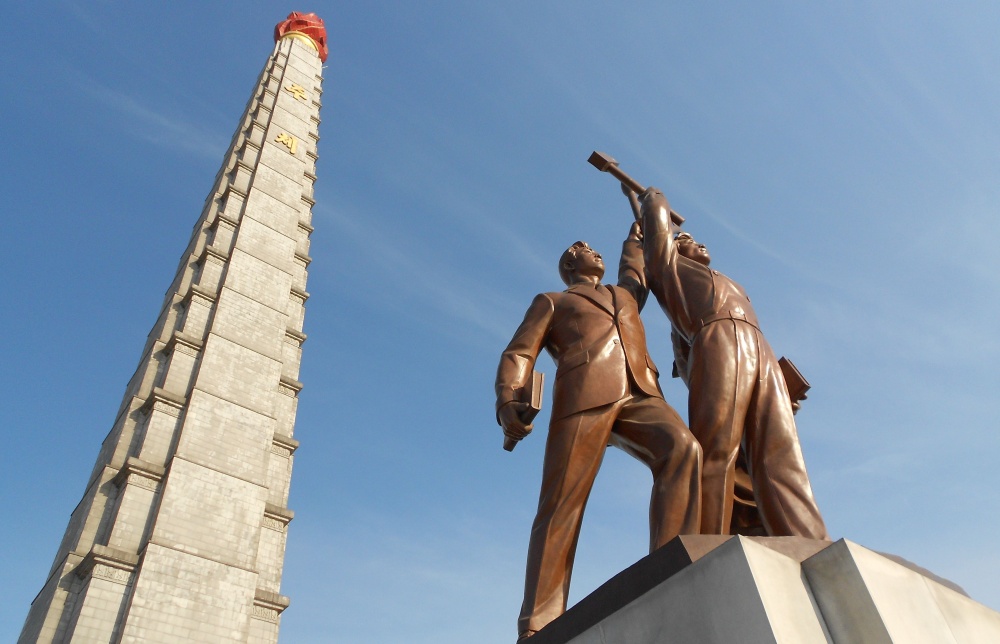
Kim Il-sung Wanted to Unify Korea Under Communism
Kim Il-sung believed that Korea should be united under communist rule, and he thought the South Korean government was weak enough to be overthrown.
He planned an invasion to bring all of Korea under his control.
He got permission and support from Joseph Stalin (the Soviet Union) and Mao Zedong (China), who both wanted to spread communism in Asia.
In June of 1950, he launched a surprise attack across the 38th parallel. His forces quickly captured large areas of the South, including the capital, Seoul.
However, things didn’t go as smoothly as he planned.
South Korea’s Resistance Triggered the Korean War
When North Korea invaded in 1950, the sudden attack caught the South off guard, but it didn’t collapse. President Syngman Rhee quickly sought help from the United States and the United Nations.
Within days, American forces arrived, and 16 other countries joined in under the flag of the United Nations. And that was the start of the Korean War.
The Korean War Ended in a Stalemate
By 1953, both North Korea and South Korea were exhausted. Eventually, they agreed to stop fighting without a peace treaty, so the war ended in a stalemate.
The armistice was an agreement signed in 1953 that stopped the fighting in the Korean War but didn’t create a peace treaty.
Both remained heavily armed and continued to see each other as enemies. Families were split apart, and the damage done to Korea was massive.
The war created deep scars that have not healed, even after decades.
The Demilitarized Zone Was Established
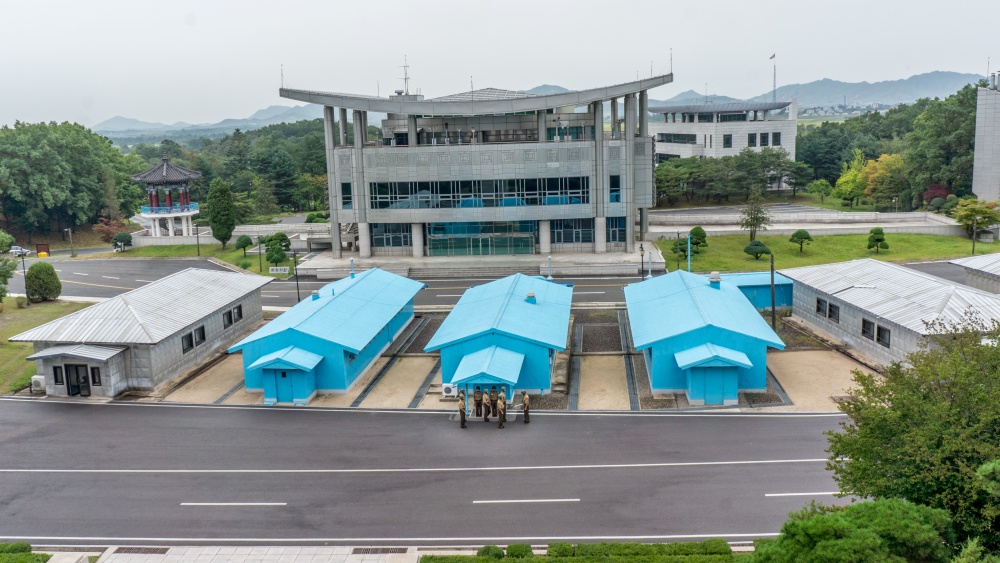
As part of the armistice agreement in 1953, a Demilitarized Zone of about 250 kilometers long and 4 kilometers wide was created near the 38th parallel. It acts as a buffer between North Korea and South Korea.
Both sides agreed not to place heavy weapons or troops inside the zone, although it remains one of the most heavily guarded borders in the world.
South Korea and North Korea Are Still at War
Even though the fighting stopped in 1953, no peace treaty was ever signed, so North Korea and South Korea are still technically at war.
Over the years, there have been efforts to talk, cooperate, and even reunite families separated by the war. But there is still a deep distrust.