
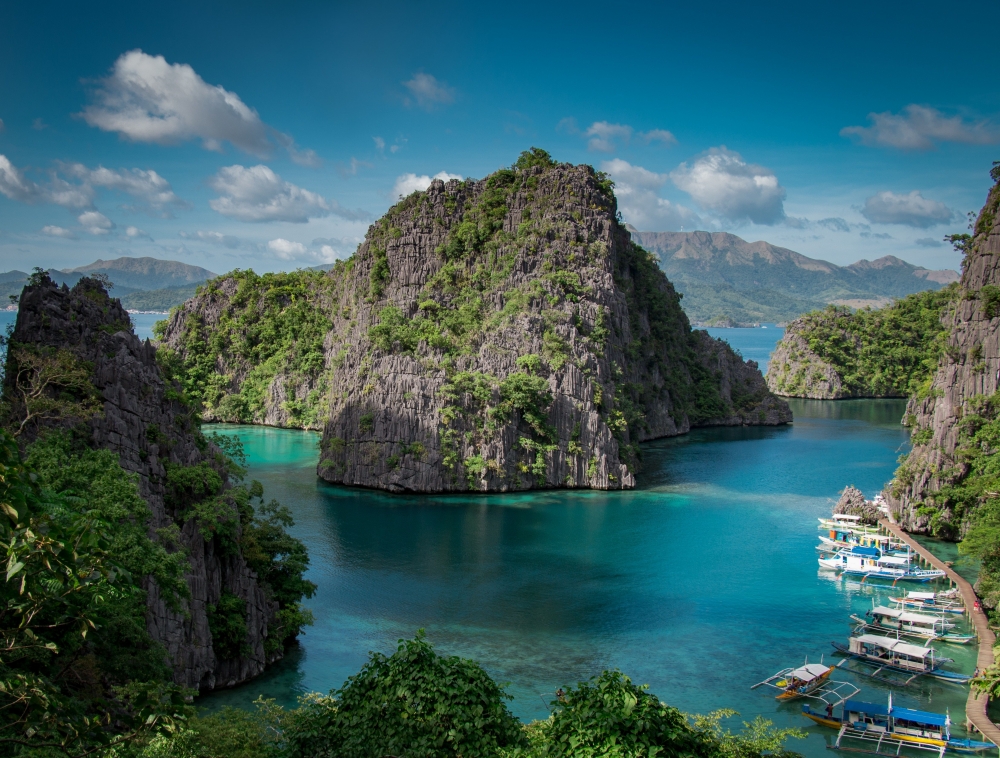
Unlike most countries, the Philippines doesn’t occupy one land mass. It is an archipelago with 7,641 islands; it has a fragmented geography.
The Archipelagic Doctrine was first adopted in the 1973 Constitution, even after the United Nations Convention on the Law of the Sea (UNCLOS) initially rejected the concept before later recognizing it as an international rule.
The Philippines adopted the Archipelagic Doctrine in its 1973 Constitution, almost a decade before the UNCLOS recognized it internationally in 1982.
It basically states that the internal waters are also part of the national territory of the Philippines. Foreign entities can’t pass through it without permission.
The Archipelagic Doctrine Recognizes the Philippines as a Single Country
The Archipelagic Doctrine treats the Philippines as a single, united country despite being made up of thousands of islands.
The government has authority not only over Luzon, Visayas, and Mindanao but also over the smaller islands and the seas that link them.
And all Filipinos, no matter which island they live on, belong to one territory and must abide by the laws and policies implemented within it.
Imaginary Lines Connecting the Outermost Points Are the Archipelagic Baselines
To apply the Archipelagic Doctrine, the Philippines must establish baselines.
Baselines are imaginary straight lines that connect the outermost points of the farthest islands. Everything inside them is part of the national territory.
They are also the starting points for measuring the extent of the territorial sea, the Exclusive Economic Zone, the Contiguous Zone, and airspace.
National Territory of the Philippines Under the Archipelagic Doctrine
The Archipelagic Doctrine clearly defines what belongs to the Philippines. It is not limited to land but also covers water, airspace, and natural resources.
Waters Enclosed by the Baselines Are Land Territory
The waters enclosed by the baselines are treated the same way as land territory; they are called internal waters.
No foreign ship, fishing vessel, or submarine has the right to freely enter these waters without permission from the Philippine government.

The Territorial Sea Extends 12 Nautical Miles From the Archipelagic Baseline
Beyond the baselines, the Philippines also controls a territorial sea that extends 12 nautical miles outward.
Within this 12-mile zone, it has full sovereignty, so foreign ships can’t simply enter this area without following Philippine laws.
However, under international law, they may exercise what is called the “right of innocent passage.”
They can pass through it as long as they don’t engage in activities that threaten the peace, security, or environment in the country.
The Contiguous Zone Extends 24 Nautical Miles From the Archipelagic Baseline
The Contiguous Zone of the Philippines is a maritime area extending up to 24 nautical miles from the baseline, within which it has sovereign rights.
Sovereignty means full control over a territory, while sovereign rights mean limited authority to use and manage resources without owning the area completely.
The government can enforce laws related to customs, immigration, sanitation, and security to prevent smuggling, illegal entry, and other threats.

The Exclusive Economic Zone Extends Up to 200 Nautical Miles From the Archipelagic Baseline
Further from the territorial sea is the Exclusive Economic Zone, which extends up to 200 nautical miles from the baseline.
In this area, the Philippines doesn’t have full sovereignty but rather sovereign rights to use and manage its natural resources, including fishing, mining, oil exploration, and energy production.
Other countries can’t do so without Philippine consent, but they may still have the right to navigate and lay submarine cables under international law.
Airspace Above the Archipelago Is Part of the Territory
The Archipelagic Doctrine not only covers land and sea but also the airspace above the entire archipelago.
The Philippines has full authority to regulate flights within its airspace, whether by commercial airlines, private planes, or military aircraft. It can charge fees if it wants to, which contributes to the economy.
It is to protect the country and its people from surveillance, smuggling, or unauthorized military activity by foreign countries.
The Archipelagic Doctrine Is Backed by UNCLOS
The Archipelagic Doctrine is supported by international law, by the UNCLOS.
UNCLOS recognizes the rights of archipelagic states like the Philippines to treat their islands and the waters in between as a single territory.
It also sets clear rules for baselines, territorial seas, Exclusive Economic Zones, Contiguous Zones, and rights over airspace.