

Karl Marx believed that the way society organizes its economy affects nearly every aspect of life, including politics, culture, and social relationships.
He argued that society is divided into social classes whose interests often conflict, leading to inequality and class struggle.
Major social stratification systems include slavery, caste, estate, and class systems. The class system is the most common.
Communism was his proposed solution; he saw it as the final stage of human social development, where social classes would disappear.
In this classless society, the state would eventually become unnecessary because people could govern themselves cooperatively.
Marxism Is the Philosophy of Karl Marx
Karl Marx lived in the 1800s, but his philosophy is still being talked about today in conversations about poverty, inequality, and workers’ rights.
Father of Communism
Marx is the Father of Communism.
He believed that a capitalist society is unfair because a small group of people own most of the wealth while the rest work hard but stay poor.
It should be replaced with a classless society, or communism, where everyone shares wealth and resources. Social classes must be abolished.
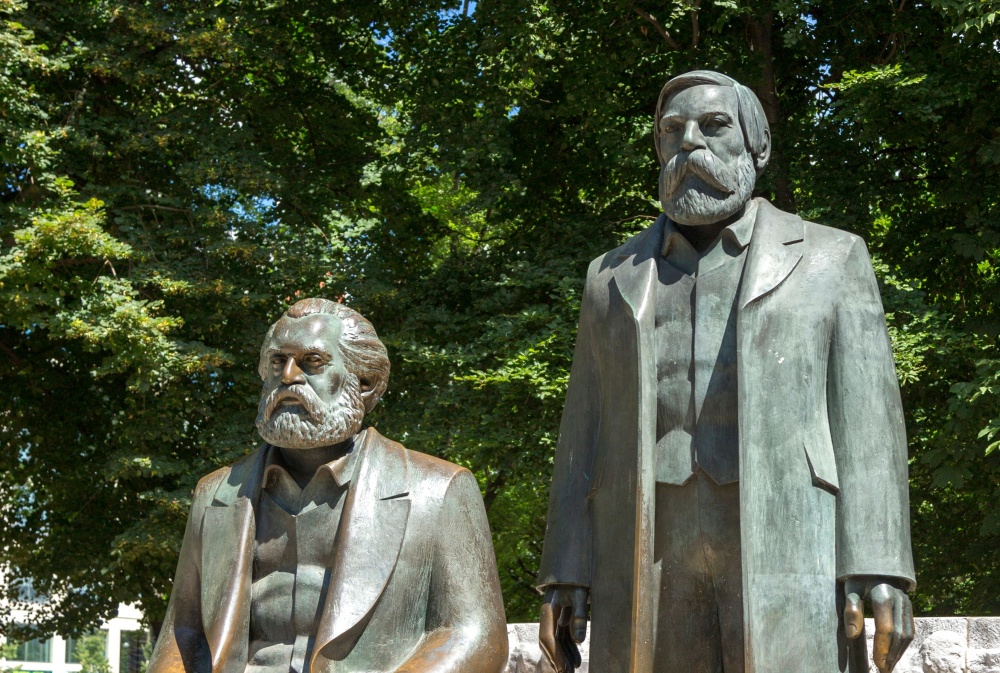
Friend of Friedrich Engels
Friedrich Engels helped Marx financially when he was poor and struggling, especially while writing Das Kapital.
He co-wrote The Communist Manifesto in 1848, which was a short book that outlined the principles of communism and called on workers around the world to unite against capitalist exploitation.
Communism Is a Form of Society Based on Marxism
Communism is a social and economic system based on Marxism.
In theory, it seeks to create a classless society where wealth and resources are shared collectively. Essential industries are not owned by private individuals.
However, different countries have interpreted communism in different ways.
Many attempts to implement it have faced significant economic and political challenges, and several communist states have become authoritarian.
What Karl Marx Said About Capitalism
Karl Marx was strongly critical of capitalism and believed it should eventually be replaced by a classless communist society.
Capitalism Taught Us That Working Hard Is Good, Relaxing Is Bad, and Owning Stuff Makes Us Happy
According to Marx, capitalism encourages people to focus too much on material things and not enough on their human potential.
They are judged by how much money they make or what they own, so they believe that success is measured by wealth and possessions.
In a Capitalist Society, Rich People Keep Getting Richer While Poor People Often Stay Poor
In a capitalist economy, wealth keeps flowing toward those who already have money; business owners (the capitalists) earn profits from their workers’ labor, while workers earn just enough to survive.
This creates a gap between the rich and the poor, which gets wider over time.
Workers Make Money for the Capitalists But They Don’t Get All the Value of Their Work
If a worker creates a product worth $100 but is only paid $30, the remaining $70 goes to the business owner, who doesn’t do the actual work.
Workers Can “Correct” Capitalism Because Businesses Depend on Them
Businesses can’t function without workers, so if large numbers of them stop working, these businesses can’t make money.
Marx thought that if they came together, they could fight back against unfair systems and build a better one. He called this the “revolutionary potential.”
They can change the system because they make the system run.
The Economy Keeps Running Even If Many People Become Unemployed
Marx said that unemployment is a built-in feature of capitalism.
The existence of a “reserve army of labor,” or unemployed workers, keeps wages low because those who demand higher pay can easily be replaced.
The “reserve army of labor” is the pool of unemployed or underemployed workers that helps keep wages low.
Capitalism prioritizes profit over people’s well-being. As a result, companies may lay off workers or move jobs elsewhere if doing so increases profits.
Capitalism Makes Us Stress About Things That Don’t Really Matter
For Marx, capitalism makes people worry too much about money, success, status, and material possessions.
They chase after the newest things and feel bad when they don’t have enough.
They feel disconnected from themselves and others; they become like cogs in a machine, working all day but not feeling fulfilled (alienation).
Capitalism Carries Within Itself Contradictions That Can Lead to Its Downfall
Capitalism contradicts itself.
For example, while businesses want to pay workers less to make more profit, they also need those workers to buy their products. If people have no money, who will buy what’s being sold?
Also, businesses compete so hard, which can lead to bankruptcies, economic crises, unemployment, and growing dissatisfaction among workers.
Marx believed that these problems would eventually cause capitalism to fall apart, leading first to socialism and ultimately to communism.
Good to Know: Marxist Terminologies
Karl Marx used numerous terms and concepts to explain Marxism.
Communism
Communism is a political and economic system where all property is publicly owned, and there are no social classes.
Factories, farms, and businesses are owned by the community. People work based on their ability and receive based on their needs.
Socialism
Socialism is a system where the government or the people collectively own and manage major industries and services, like healthcare and education.
It is viewed as a transitional stage between capitalism and communism.
Unlike communism, some private property may still exist, but wealth is more evenly distributed. The aim is to reduce the gap between the rich and poor, and ensure basic needs are met for everyone.
Capitalism
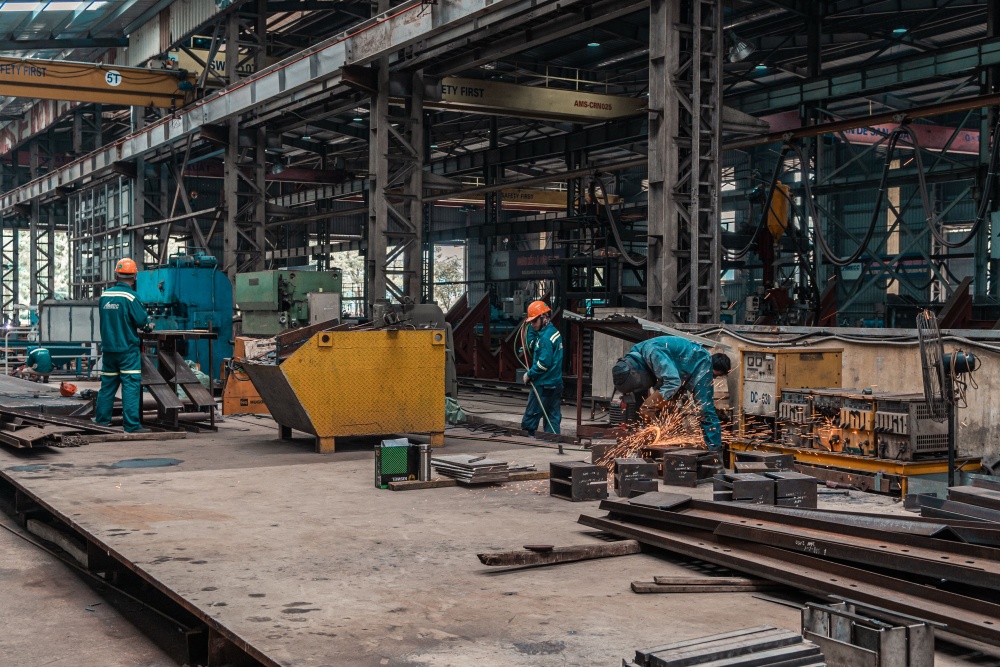
Capitalism is an economic system where businesses and resources are privately owned, and goods and services are produced for profit.
People work in exchange for wages, and wealth is created through investment, competition, and trade. Prices are set by supply and demand.
Bourgeoisie
According to Marx, the bourgeoisie is the ruling class that owns the means of production in a capitalist society.
They control wealth, resources, and power. They benefit from the labor of workers while keeping most of the profits for themselves.
Proletariat
The proletariat is the working class, or those who don’t own any means of production and must sell their labor to survive.
They create all value in society through their labor, but they don’t get to keep the full value of what they produce because a portion is taken as profit by the bourgeoisie. Marx considered this a form of exploitation.
However, he also believed that they had the power to overthrow capitalism if they united and acted collectively: “Workers of the world, unite!”
Alienation
Alienation is the feeling of disconnection that workers experience in a capitalist system. It is a result of being treated like a machine.
Workers don’t own the products they create, don’t control how they work, compete with one another instead of cooperating, and have little opportunity to express their creativity and human potential.
As a result, they become disconnected from their work, from other people, and even from themselves.
Class Struggle
Class struggle is the ongoing conflict between different social classes, especially between the bourgeoisie and the proletariat.
According to Marx, all of human history is shaped by class struggle.
This class struggle would end only when the working class overthrows the capitalist system and builds a classless society.
Surplus Value
If a worker makes a product worth $400 in a day but is paid only $200, the remaining $200 is surplus value, which goes to the business owner.
Surplus value is the extra value that workers create through their labor but don’t receive as wages.
Marx said this is the source of profit in capitalism. The more surplus value they extract, the more profit they make, without increasing wages.


Welfare State
A welfare state is a government that provides services and financial support to help people meet basic needs, including free or low-cost healthcare, education, pensions, unemployment benefits, and housing assistance.
This exists in many capitalist and democratic countries and is typically funded through taxes; its goal is to reduce poverty and inequality.
The main purpose of taxes is to fund public services that support society, including social welfare programs.
Some Marxists view it as a way to reduce social unrest caused by capitalism without fundamentally changing the capitalist system itself.
Vanguard
The vanguard is a group of revolutionary leaders who usually come from the most politically aware part of the working class.
Because not all workers are politically active or aware, the group acts as a guide to raise class consciousness and lead the revolution. After a revolution, it may also take charge of building the new socialist state.
The idea comes mainly from Vladimir Lenin’s interpretation of Marxism.
Commodity Fetishism
Commodity fetishism is when people see products only for their brand or appearance, forgetting the human labor and social relationships behind them.
In capitalism, things seem to have value by themselves, as if they magically create wealth, but in reality, all value comes from labor.
Historical Materialism
Historical materialism says that history changes when the way people produce goods comes into conflict with the way society is organized.
For instance, when new technology or industries emerge, the old social systems may no longer work. This conflict leads to class struggles, revolutions, and eventually new systems, such as socialism and communism.
Is a Classless Society Possible?
Karl Marx believed that a classless society was the next step in human development. No one would be richer or poorer than others. Everyone would contribute what they could and receive what they needed.
But the question is, is this possible? That is still up for debate.
Many past attempts at building communist societies failed due to poor leadership or corruption; communism can become authoritarian when the government gains excessive control over political and economic life.
Many people naturally seek personal achievement, wealth, and ownership, making a truly classless society difficult to achieve in practice.