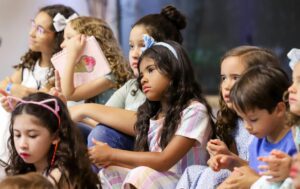
The human geography of the Philippines tells us a lot about who Filipinos are and how they are distributed across the archipelago, which has an impact on their livelihoods, the languages they speak, and their overall identities.
An archipelago is simply a group of islands clustered together in one geographic area, like the Philippines.
Over 116 million Filipinos are spread across 7,641 islands, and over 100 different ethnic groups and languages exist in the country.
But despite the “divide,” they are united by one national language and a shared sense of being Filipino that connects all these diverse groups.
Let us discuss the human geography of the Philippines.
The Philippines Has a Population of Over 116 Million
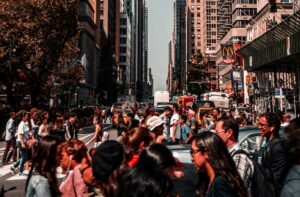
The Philippines is the second most populated country in Southeast Asia, after Indonesia. Most Filipinos live in Luzon, especially in and around Metro Manila, because that’s where the opportunities are concentrated.
Its population is disproportionate to its capacity and land area.
So, there are crowded places, as well as food and housing shortages. The natural resources are also stretched beyond what the environment can sustainably provide, even at the expense of the animals that live there.
The good thing is, it also means that the country has a large labor force, which can help economic growth if managed properly.
13th Most Populous Country Globally
Being highly populated has both advantages and disadvantages.
On the positive side, there are many Filipinos who can work, create businesses, and contribute to the economy.
On the downside, the Philippines faces problems with congestion, poverty, and pressure on resources, such as land, water, and energy.
It also makes governance challenging because the government needs to provide education, healthcare, and jobs to a very large number of people.
Declining Growth and Fertility Rates
Even though the Philippine population is large, the rate at which it is growing has started to slow down. Fertility rates are declining.
Fertility rates measure how many children a woman is expected to have within a certain period.
In past decades, Filipino women had four or more children. Today, the number is closer to two children on average.
If it continues to go down, the country will eventually have an aging population, which Japan is are already dealing with.
There will be fewer workers, slower economic growth, and a heavier burden on social services by the government and non-profit organizations.
The Philippines Has a Diverse Ethnolinguistic Composition
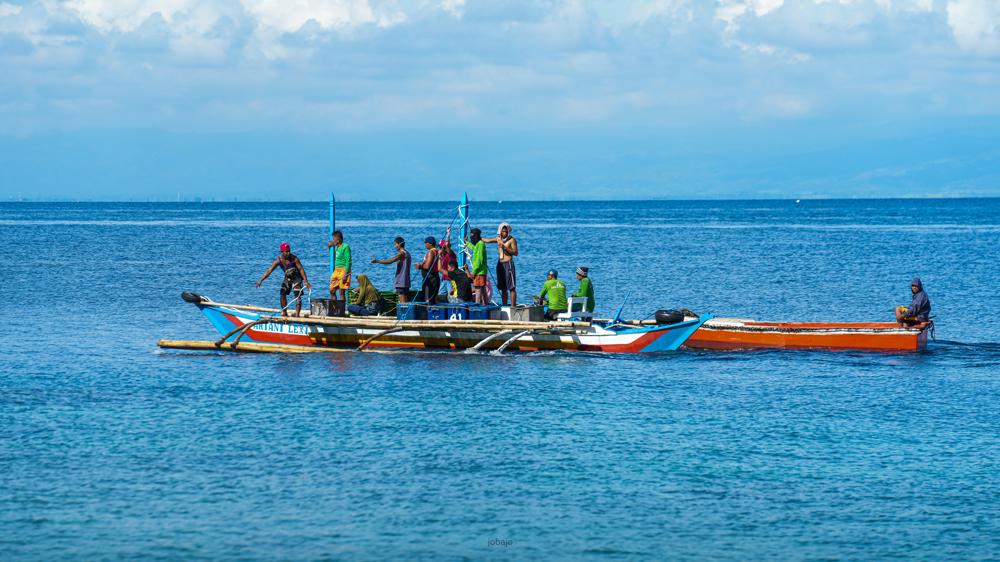
The Philippines is culturally and linguistically diverse. Filipinos speak over 170 languages and dialects, which are connected to different ethnic groups.
Tagalog (26%)
Tagalog is the largest ethnolinguistic group in the Philippines, making up about 26% of the population. Their language, also called Tagalog, was the basis of Filipino, which is one of the official languages in the country.
Most Tagalogs live in Luzon, especially in Metro Manila and its nearby areas, including Bulacan, Batangas, Cavite, and Laguna.
The dominance of the Tagalog language creates a bit of tension, since some groups feel their own languages and cultures get overshadowed.
For instance, Binisaya is widely used across the Visayas and Mindanao, so they ask why they need to prioritize Tagalog in school and national media when their own language is already dominant in their daily lives.
Binisaya (14%)
Binisaya people make up around 14% of the human geography of the Philippines. They are mostly found in the Visayas, particularly in Cebu, Bohol, and parts of Negros, as well as in Mindanao.
They began moving to Mindanao during the American period when people from the Visayas and Luzon were encouraged to settle its wide farming lands.
More migrants followed in the 1930s to 1950s, which is why Binisaya became widely spoken across Mindanao today.
Ilocano (8%)
The Ilocano group represents about 8% of the Philippine population. They mainly live in northern Luzon, particularly in the Ilocos Region.
However, the Ilocos Region has limited farmland and resources, so many have also migrated to other parts of the Philippines and even abroad.
The current president of the Philippines, President Ferdinand Marcos Jr., is an Ilocano. Two other Ilocano presidents have also led the country in the past: Ferdinand Marcos Sr. and Elpidio Quirino.
Other Ethnolinguistic Groups
Aside from Tagalog, Binisaya, and Ilocano, there are many other ethnolinguistic groups in the Philippines, such as Bicolanos, Kapampangans, Warays, Tausugs, Maranaos, Pangasinenses, Maguindanaons, and many more.
Each group has its own language, culture, and traditions. For example, Kapampangan cuisine is usually exotic and unusual: stuffed frog, adobong crickets, etc. Bicolano cuisine, on the other hand, is almost always spicy.
In Mindanao, the Tausugs, Maranaos, and Maguindanaons are Muslim groups, so they preserve Islamic traditions and practices.
Around 10-15% of the Philippine Human Geography Are the Indigenous Peoples
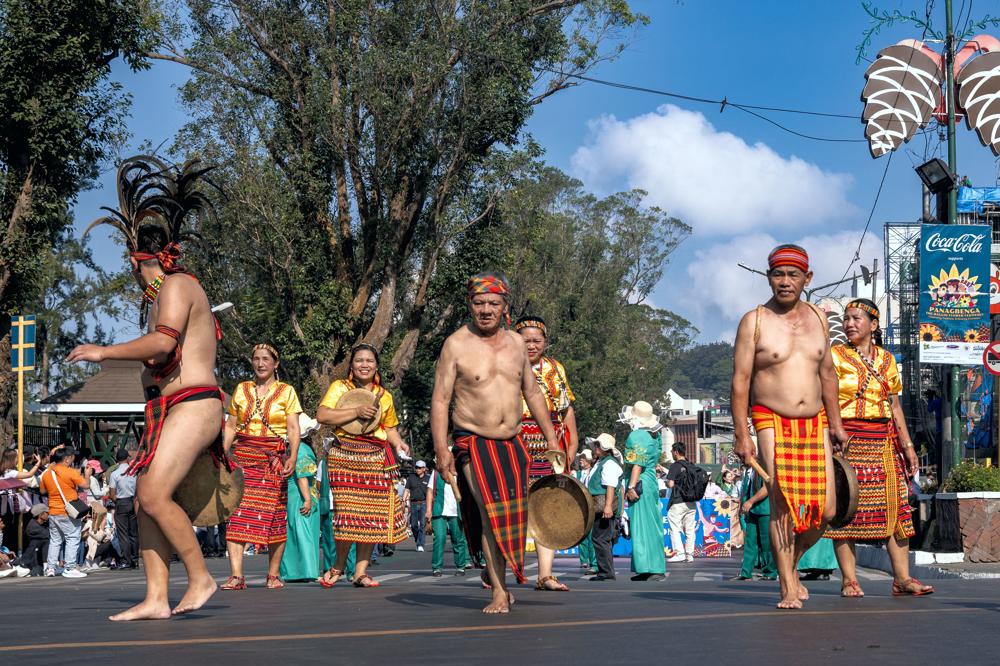
Indigenous peoples make up around 10-15% of the Philippine population; they are the groups that weren’t influenced by the colonizers.
Indigenous Filipinos weren’t fully influenced by colonizers because they stayed geographically isolated and kept strong independent cultural traditions that limited outside control.
Many of them live in remote areas, mountains, and ancestral domains, so they help preserve the environment and natural resources.
Apart from that, they protect the “true” Filipino traditions and knowledge systems, including farming methods, weaving, rituals, and oral histories.
However, they are usually discriminated against and lack access to basic social services. The Indigenous Peoples’ Rights Act exists, but many still struggle to have their rights recognized and protected.
Luzon
In Luzon, the most well-known Indigenous peoples are the Igorot groups of the Cordillera region, such as the Ifugao, Kankanaey, Bontoc, and Ibaloi.
They are famous for their rice terraces, some of which are recognized as UNESCO World Heritage sites.
The UNESCO World Heritage site called the Rice Terraces of the Philippine Cordilleras includes five terrace clusters: Batad, Bangaan, Hungduan, Mayoyao, and Nagacadan.
Meanwhile, the Aeta and Agta groups in Zambales, Pampanga, and other areas are among the earliest inhabitants of the Philippines.
They live in mountainous or forested areas, where they keep their traditions alive despite pressures of modernization.
Visayas
In the Visayas, Indigenous groups are fewer. The Ati of Panay Island are among the most recognized; they are believed to be among the earliest settlers of the Philippines, related to the Aeta groups in Luzon.
Traditionally, they practiced hunting and gathering, but today, many are farmers and laborers in rural communities across Panay and nearby islands.
Mindanao
Mindanao has the largest concentration of Indigenous peoples in the Philippines, aside from the Muslim Moro groups; they are called the Lumad, a collective term for many non-Muslim Indigenous communities.
Some of the Lumad groups include the Manobo, T’boli, Bagobo, and Subanen.
Like Indigenous communities in Luzon and the Visayas, many of them traditionally live in areas rich in forests and natural resources, especially in the uplands and interior regions of Mindanao.
The Philippines Is Predominantly Roman Catholic
Roman Catholicism is the largest religion in the Philippines, caused by the over 300 years of Spanish colonization.
However, other Christian groups, a significant Muslim population, and indigenous belief systems also exist.
Let us look at the human geography of the Philippines in terms of religion.
Roman Catholic (76%)
In 2026, 76% of Filipinos identify as Roman Catholic; the Philippines is the largest Catholic-majority country in Asia and one of the largest in the world.
It is visible in everyday life, as you will see many of them in Catholic churches, even early in the morning. You will also see crucifixes, religious statues, and images of God in almost every Filipino establishment you visit.
Other Christian Groups (15%)
15% of Filipinos belong to other Christian denominations: Protestants, Evangelicals, and homegrown churches, such as Iglesia ni Cristo.
Catholics are Christians, but not all Christians are Catholics.
Iglesia ni Cristo, founded in the Philippines, has millions of followers and is influential in politics due to bloc voting. At times, they even initiate political movements and gather on the streets to be heard.
Muslim (6%)
About 6% of the Philippine population is Muslim, mostly living in the Bangsamoro Autonomous Region in Mindanao. The percentage might have increased, as the data was 2020.
The main Muslim ethnolinguistic groups are the Maranao, Maguindanaon, and Tausug, along with the Yakan, Sama‑Bajau, Iranun, and Jama Mapun.
Islam reached the Philippines before Spanish colonization through trade and missionaries from Malaysia and Indonesia.
Indigenous Beliefs
A small percentage of Filipinos still practice indigenous religions and belief systems, usually tied to nature, ancestral spirits, and rituals.
For instance, the Ifugao honor rice gods during planting and harvest, and the T’boli perform rituals for spirits connected to weaving.
Quezon City Is the Most Populated City in the Philippines
Quezon City is the largest city in the Philippines in terms of population, with 2.9 million residents that only grows as years go by.
Many government offices, universities, and large business districts are situated there. So, the large population is due to urban migration, as people from provinces move to the city for better opportunities.